How to Tell What Your Area Rug Is Made of Before You Clean It
Wool, silk, and antique rugs each need a different approach, and figuring out which one you have has to come before any water touches it.
September 14, 2026 · 4 min read
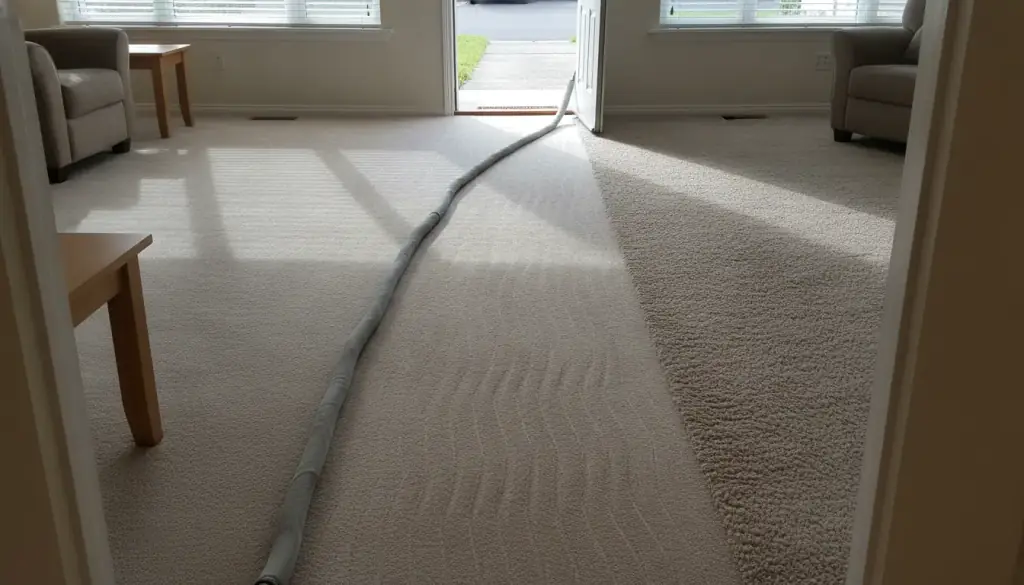
An area rug and a piece of wall to wall carpet can look almost identical and still need completely different handling. The material is what decides that, not the size or the price tag.
Why fiber identification comes first
Wool, silk, synthetic fibers like nylon or polyester, and plant fibers used in some flatweaves all react differently to water, heat, agitation, and cleaning agents that are perfectly safe on one and damaging on another. A method that's completely standard for a synthetic area rug can felt wool, dull silk, or bleed dye on an Oriental piece with natural dyes. Before anything else happens, the fiber gets identified, sometimes by a burn test on a small clipping from the fringe, sometimes by how the pile feels and how the rug was constructed on the back.
Why the back of the rug tells you more than the front
The front of a rug shows wear and color, but the back tells you how it was made. A knotted construction, where you can see individual knots and the pattern repeats through to the underside, points toward a handmade wool or silk piece. A woven backing with a uniform grid, or a rug with a separate backing material glued or stitched on, almost always means machine made and synthetic. This single check, turning a rug over before cleaning it, catches a lot of what a quick glance at the pile alone would miss.
Wool, silk, and the difference agitation makes
Wool is durable in a lot of ways and fragile in one specific one: too much agitation combined with moisture and heat can cause the fibers to felt, matting the pile down permanently in a way that can't be brushed back out. Silk is worse in a different direction. It can lose its sheen and even change texture if the wrong solution touches it, since silk fiber is a protein structure that reacts to pH the way wool does, but with even less room for error. Both need a gentler process than most synthetics require, and both punish the wrong one immediately and visibly.
Oriental, Persian, and antique rugs specifically
These are usually wool or silk to begin with, but the bigger variable is the dye. Older and handmade rugs, especially genuinely antique ones, were often dyed with natural dyes that are far more prone to bleeding or shifting color when they get wet than the synthetic dyes used in most modern production. That isn't a flaw in the rug, it's just a property of how it was made, and it means the cleaning process has to account for it directly rather than assume the rug will behave like a newer synthetic piece.
What color bleed testing actually checks for
Before any wet process touches a rug, a small hidden area gets tested with a white cloth and a small amount of moisture to see whether any dye transfers. If it does, the approach changes, sometimes to a drier method, sometimes to isolating and stabilizing the dye before cleaning at all. Skipping this step is how a rug ends up with one color running into another permanently, and it's one of the fastest ways to turn a cleanable rug into a ruined one. This test takes only a couple of minutes, but it's the single step that decides everything that happens after it.
What happens when the wrong process meets the wrong fiber
A synthetic rug can usually handle a fairly aggressive clean without much risk, which is part of why some companies default to one process for every rug that comes through the door. Run that same process on a hand knotted wool piece and the risk is real: matted pile that won't brush back out, color that's bled from one section into another, or a rug that comes back structurally weaker than it went in. None of that shows up as an obvious mistake in the moment. It shows up over the following days, as the rug dries and the damage becomes visible.
Why a rug isn't just carpet that moves
Wall to wall carpet is installed once, cleaned in place, and made from a fairly narrow range of synthetic fibers built for exactly that use. A rug can be decades old, hand knotted, made from natural fiber and natural dye, and it usually gets picked up and cleaned as its own separate piece rather than in place on the floor. Treating it like carpet that happens to be portable is how good rugs get damaged by well meaning cleaning. Treating it like the specific object it is, is how they last another few decades.
- Wool
- Silk
- Synthetic (nylon, polyester, olefin)
- Natural plant fiber (jute, sisal, cotton flatweave)
- Antique or hand-dyed pieces with natural dye
If you're not sure what a rug in your home is made of, that uncertainty alone is worth having it looked at before anyone puts water anywhere near it.
Brilliant Dry Carpet Care, (380) 285-7131
Call (380) 285-7131More articles
How Long Carpet Really Takes to Dry, and Why Ours Doesn't
Hot water extraction leaves more moisture behind than most people realize, and that moisture is exactly what brings old stains back days later.
Getting Pet Stains and Pet Odor Out of Carpet for Good
Pet odor usually lives in the carpet backing and pad, not on the surface, which is why sprays and powders only ever work for a day.