Getting Pet Stains and Pet Odor Out of Carpet for Good
Pet odor usually lives in the carpet backing and pad, not on the surface, which is why sprays and powders only ever work for a day.
September 14, 2026 · 4 min read
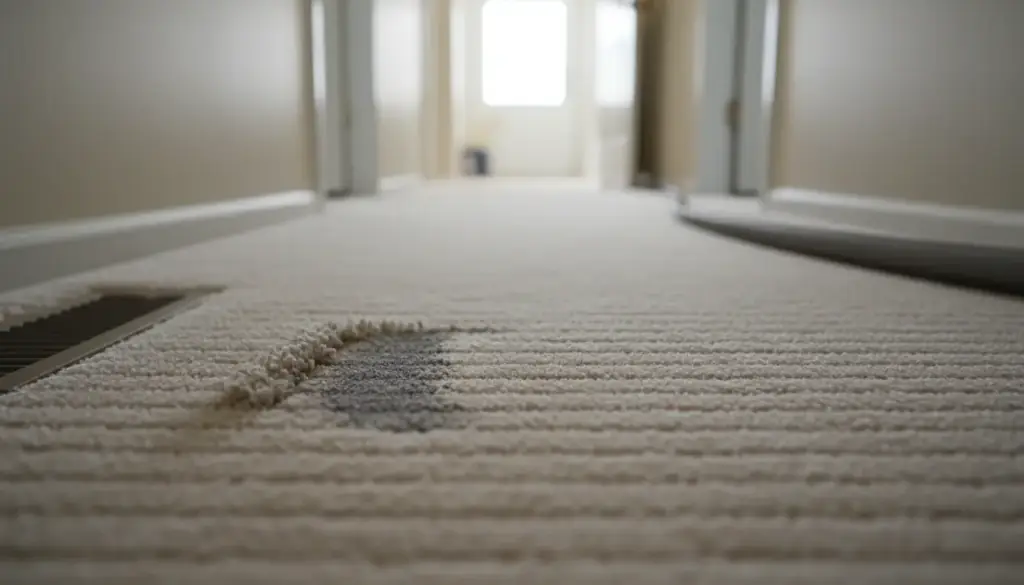
Pet odor in carpet rarely lives where people spray to fix it. Air freshener and carpet powder work on top of the pile, and pet odor mostly lives underneath it, which is why so many of those products stop working by the next afternoon.
Where the smell actually lives
Urine soaks straight through the carpet fibers into the backing, then into the pad underneath, and if it happened more than once in the same spot, or sat for a while before anyone found it, it can reach the subfloor. Carpet fiber itself doesn't hold odor especially well. The backing and the pad do, because they're porous, and because urine crystallizes as it dries, locking bacteria and the compounds that cause the smell into the material. Cleaning the surface of the carpet without addressing what's underneath just masks the problem for a day or two.
Why fragrance sprays fail
A fragrance spray adds a stronger, more pleasant smell on top of the existing one. It doesn't remove or break down what's causing the odor, so as the fragrance fades, usually within hours, the underlying smell is right back where it started, sometimes stronger because heat and humidity reactivate the crystallized urine salts. This is the most common reason a homeowner tells us they've tried everything and nothing works. They've tried everything that covers the smell. Nothing they've used actually neutralizes it.
What enzymatic neutralizing does differently
Enzymatic treatments work on the chemistry of the problem rather than the smell of it. The enzymes break down the organic compounds in the urine, including the proteins and uric acid crystals that regular cleaning and fragrance can't touch, so the odor source itself is gone rather than covered. Done properly, with real contact time to work rather than being rinsed away in thirty seconds, this is the difference between a carpet that smells clean for a week and one that smells clean permanently.
What we actually use instead of surface products
For odor specifically, the enzymatic step happens as a pretreatment, worked into the affected area and given time to sit before the rest of the cleaning starts. Contact time matters more than product strength here. A treatment that's flushed or vacuumed up too quickly hasn't had the chance to actually break down what's causing the smell, it's just been diluted and moved around a little. On carpet, that pretreatment gets followed by our normal dry compound process over the whole room, so the treated area blends in with the rest of the floor rather than looking like an obvious spot that was worked on separately.
Pet odor isn't limited to carpet either. Upholstery and mattresses hold onto it in much the same way, through fabric and padding that behave like a sponge once urine or saliva gets into them. The same principle applies: a fabric refresher on top does nothing for what's sitting in the cushion filling underneath, and an enzymatic treatment aimed specifically at the affected cushion or mattress area gets much further than a general spray ever will.
Why stairs are the hardest version of this job
Stairs get treated by pets differently than open floor, often as a single repeated spot near the top or bottom rather than spread out, and the padding under stair carpet is usually thinner and sits closer to the wood underneath, which means there's less material to absorb before it reaches something that won't simply neutralize with a surface treatment. We worked on a set of stairs in Columbus a while back with several pet stains that more than one other company had already attempted and given up on. The stains came out. It took real time and the right order of treatment, not a quick pass with a spray bottle.
When carpet genuinely can't be saved
Sometimes the honest answer is that the carpet is past saving. If urine has reached the subfloor repeatedly, especially wood subfloor that's absorbed it over months, no surface or pad level treatment reaches that. We'll tell a customer this directly rather than run a service that won't hold, because a treatment that looks like it worked for two weeks and then comes back is worse for everyone than an honest answer up front. We assess this with a straightforward check, peeling back a corner of the carpet in the affected area to look at the pad and subfloor directly rather than guessing from the smell alone. If the subfloor itself shows staining, or the smell is still strong with the carpet fully pulled back, that's usually the point where replacement, not cleaning, is the honest recommendation.
- Odor is strongest right where the subfloor meets an exterior wall or vent
- The smell returns strongly within a day or two of any cleaning, wet or dry
- Discoloration is visible on the underside of the pad when it's lifted
- The affected area has been repeatedly used by the same pet over a long period
Brilliant Dry Carpet Care, (380) 285-7131
Call (380) 285-7131More articles
How Long Carpet Really Takes to Dry, and Why Ours Doesn't
Hot water extraction leaves more moisture behind than most people realize, and that moisture is exactly what brings old stains back days later.
What to Do in the First Ten Minutes of a Carpet Spill
The first ten minutes after a spill decide more about whether it comes out than anything a cleaning crew can do afterward.