Why Your Grout Is Dark Even Though the Floor Is Clean
Grout gets dark because it's porous and mopping pushes dirty water straight into it, not because the floor isn't being cleaned.
September 14, 2026 · 4 min read
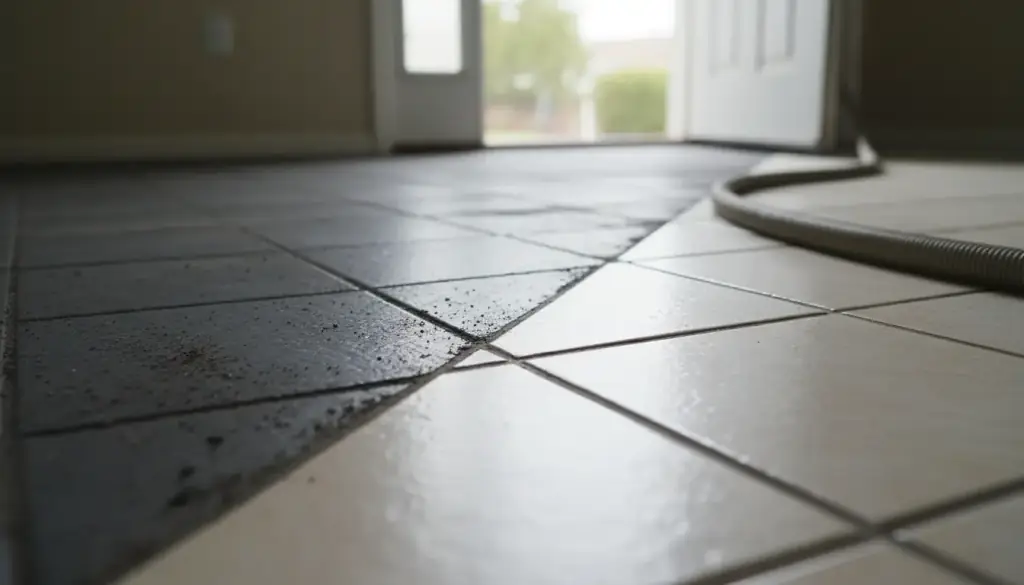
Grout lines get dark for a reason that has nothing to do with how often the floor gets mopped. Actually, the mopping is usually part of what caused it.
Grout is porous, and that's the whole problem
Tile is sealed and mostly nonporous, so dirt sits on top of it and wipes away easily. Grout is cement based and full of tiny open pores, so it behaves more like a sponge than a surface. Dirt, oil from cooking, foot traffic residue, all of it works down into those pores over time rather than staying on top where a mop can reach it. New grout is especially vulnerable in the weeks right after installation, before it's had a chance to cure fully and before any sealer has gone down, which is why floors installed without a sealer often show their first dark lines within the first year rather than after a decade of use.
Why grout color varies room to room
Grout in a kitchen usually darkens faster than grout in a bathroom, even with the exact same cleaning routine, because kitchen floors pick up cooking oil residue that clings to the porous surface differently than soap scum or bath products do. Entryway grout has its own pattern, picking up whatever gets tracked in from outside before it ever reaches a mop. None of this means one room is being cleaned worse than another, it just means different rooms are fighting different kinds of soil.
Grout haze and efflorescence, the other two culprits
Dark grout isn't the only discoloration issue. A cloudy white haze on tile near the grout lines is usually leftover sealer or thin-set residue from installation that was never fully cleaned off, and it's a separate problem from soil buildup entirely. Efflorescence, a chalky white deposit that can appear on grout in humid bathrooms or over concrete slabs, is mineral salt working its way out of the grout itself rather than dirt working its way in, and it needs a different approach than a standard clean.
Why mopping makes it worse, not better
A mop picks up dirty water from one part of the floor and drags it across the rest, and grout lines act like a trench that collects whatever runs through them. Every mop pass pushes a small amount of dirty water down into the grout, and because grout dries slower than tile, that water sits there and leaves the dirt behind as it evaporates. Over months of otherwise normal cleaning, the grout gets steadily darker while the tile itself keeps looking fine, which is exactly the mismatch that makes people think something is wrong with the floor rather than the grout.
What low moisture cleaning does differently
Instead of pushing water through the grout the way a mop does, a low moisture clean uses just enough moisture to loosen what's embedded, agitates it out mechanically, then extracts it immediately rather than letting it sit and re-settle. There's far less water involved overall, and none of it is left to dry back into the pores carrying dirt with it. It gets the grout back closer to its original color instead of just moving the problem around.
What sealing does, and doesn't do
A sealer fills those open pores after the grout is clean, which slows how fast dirt and moisture can get back in and makes the next mopping less likely to re-stain it. It doesn't clean dirty grout, and it doesn't last forever. Sealer wears down with foot traffic and repeated mopping over time, typically needing reapplication every year or two depending on how much the floor is used. Sealing dirty grout just traps the dirt underneath a clear layer, so the order matters: clean first, seal second. A simple way to check whether a sealer is still doing its job is to drip a small amount of water onto a clean grout line. If it beads up on the surface, the seal is holding. If it soaks in within a few seconds, the sealer has worn through and the grout is exposed again.
Realistic maintenance between cleanings
Sweeping or vacuuming before mopping keeps loose grit from being ground into the grout by the mop itself, which is one of the bigger contributors nobody thinks about. Wringing the mop out well, rather than leaving it soaking wet, reduces how much water actually reaches the grout lines. Neither of those replaces a real clean once staining has set in, but both slow down how fast it comes back afterward.
- Sweep or vacuum before mopping, not after
- Wring the mop out instead of soaking the floor
- Deal with spills on grout lines quickly rather than letting them dry
- Reseal on a schedule rather than waiting until it looks dirty again
Brilliant Dry Carpet Care, (380) 285-7131
Call (380) 285-7131More articles
How Long Carpet Really Takes to Dry, and Why Ours Doesn't
Hot water extraction leaves more moisture behind than most people realize, and that moisture is exactly what brings old stains back days later.
Getting Pet Stains and Pet Odor Out of Carpet for Good
Pet odor usually lives in the carpet backing and pad, not on the surface, which is why sprays and powders only ever work for a day.